

What I Carry Snowbiking: My Backcountry Gear Checklist
Heading into the backcountry in the winter can be an incredible adventure—but it comes with real risks.
The views, untouched snow, the challenge of reaching places few people ever see, and the camaraderie with your riding crew are all part of what makes snowbiking so addictive. But those same remote locations that make snowbiking special can also make a bad situation much worse if you're not prepared.
A successful day in the mountains starts long before you unload the bike. Having the right gear, tools, and safety equipment can make the difference between a minor inconvenience and a major problem.
This isn't meant to be a complete survival guide—just a look at the items I carry on every ride.
If there's something you think I missed, drop a comment below.
The Quick Checklist
On the bike: Extra fuel, tools, jump pack, tow rope, water and food
In the pack: Lights, radio, emergency shelter, saw, fire starter, first aid and spare gloves
Avalanche gear: Beacon, shovel and probe
On me: Phone/navigation, beacon and extra warmth
On the Bike
Extra Fuel
Extra fuel is non-negotiable.
Snowbikes can burn through fuel surprisingly quickly depending on snow conditions, elevation, riding style, and how much trail breaking you're doing.
For the type of riding I do, I like to have about five gallons of fuel available between the bike and the auxiliary storage on the kit. Running out of gas ten miles from the truck is a great way to turn a fun day into a long walk.
Explor our Snowbike Fuel-Storage Options. An auto-siphon kit can transfer fuel from the auxiliary storage into the bike’s tank automatically, reducing the need to stop and refuel during the day.
Tow Rope
Every riding group has that one guy.
You know the one.
The bike hasn't been serviced since last season, the chain is questionable, and somehow he never seems to carry a tow rope.
Make sure you have one. Mtn. Top Tow and Rescue kit.
Even if you never need it for yourself, chances are someone in your group eventually will.
Water
This sounds obvious, but you'd be surprised how many riders don't carry enough water.
Snowbiking is physical. You're riding, digging, lifting, and often working hard at elevation.
Hydration matters.
Carry more water than you think you'll need.
And food of course. My go-to is a peanut butter and honey sandwich, I also keep some protein bars in the pack for those just in case moments.
On the bike storage options can be found here.
In the Pack
Light
I carry two OxBow lights in my pack.
Hopefully they never get used, but if a breakdown, recovery, injury, or navigation issue keeps us in the mountains longer than expected, having reliable lighting can make a huge difference.
Nobody plans to ride out after dark—but it happens.
Radio
A radio is one of those things I simply won't leave home without.
Good communication between riders improves safety, helps keep groups together, and makes it much easier to coordinate when someone gets stuck, breaks down, or finds a great line worth sharing.
I personally run OxBow radios, but BCA also makes excellent options. Whatever brand you choose, make sure everyone in your group knows how to use it and is operating on the same channel.
Space Blanket
This falls squarely into the "hope I never need it" category.
They're inexpensive, weigh almost nothing, take up very little space, and could be invaluable in an emergency.
For the amount of room they take up, there's really no reason not to carry one.
Saw
I don't use my saw often, but when I need it, I'm always glad it's there.
A quality folding saw can quickly clear a downed tree, cut branches for a fire, or help get a bike out of a difficult situation.
I'm a fan of Silky Saws. They cut incredibly well and pack down nicely.
Lighter & Fire Starter
Always carry a lighter.
Actually, carry two.
Adding a small fire starter is cheap insurance and gives you the ability to start a fire if things don't go according to plan.
First Aid Kit
My first aid kit is fairly simple, but it contains the essentials needed to handle common injuries until we can get back to the truck.
You don't need to carry an ambulance in your backpack, but you should have enough supplies to manage basic emergencies.
Spare Gloves
Wet gloves are miserable.
I typically carry:
A couple of lighter riding gloves
One extra warm pair for emergencies
Nothing ruins a ride faster than cold, wet hands.
Avalanche Equipment
Shovel
Get a good shovel.
Seriously.
Avalanche debris can set up almost as hard as concrete. That cheap plastic shovel sitting in the back corner of your garage isn't going to cut it.
Invest in a quality avalanche shovel with a sturdy aluminum blade.
Probe
This isn't an area where I recommend cutting corners.
Buy a quality probe and buy a long one.
I prefer a 320 cm probe, which provides additional reach in deeper snowpacks and gives you more options during a rescue situation.
On My Person
Avalanche Beacon
If you're riding avalanche terrain, a beacon is essential.
Buy a quality beacon.
Learn how to use it.
Practice with it regularly.
The best beacon in the world won't help if you don't know how to operate it under stress.
Beanie
A beanie doesn't sound like a big deal until you're standing around helping your buddy dig out his bike for the third time that day.
I always keep one handy so I can pull my helmet off and stay comfortable while working on a bike, eating lunch, or taking a break.
Phone
Besides taking photos, filming your latest hero snowbike edit, and proving to your buddies that you actually made the climb, your phone can be a valuable navigation and emergency tool.
Just make sure it's charged before leaving the truck.
Tools
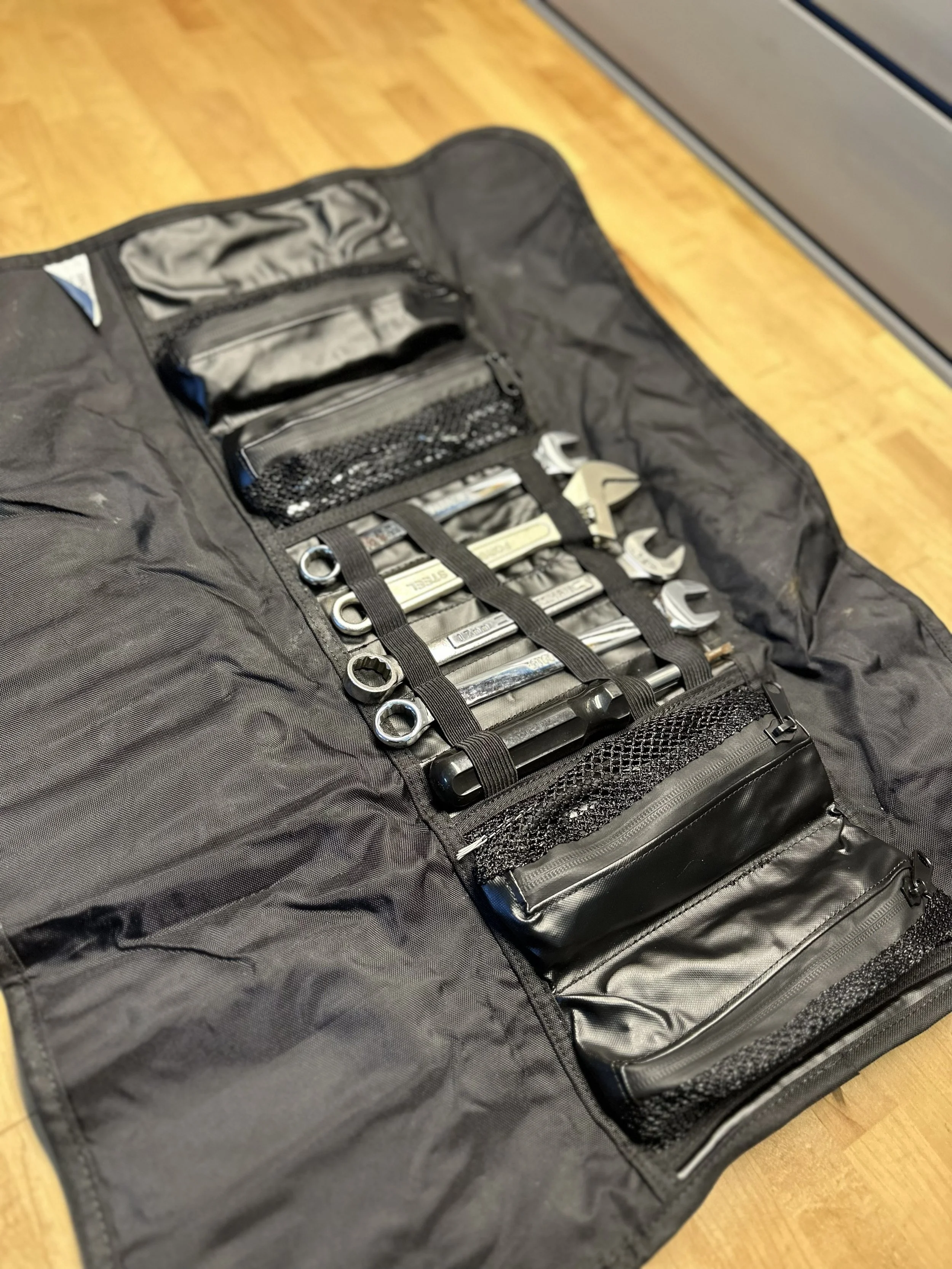
I carry a tool kit that originally came from Timbersled. Over the years, I've customized it to include exactly what I need for my bikes and kits.
A tool roll is the perfect solution for keeping your tools organized.
One of my biggest tips:
Use your backcountry tool kit at home.
When I'm working in the shop, I use the same tools I carry on the mountain. That way I know exactly what's in the kit, where everything is located, and whether I'm missing anything important.
Another tip: take your tools out after every ride.
A wet tunnel bag is the perfect environment for rust. Let your tools dry out and they'll last for years. I've seen far too many expensive tool kits turn into rusty paperweights because they were forgotten in the tunnel bag all season.
Jump Pack
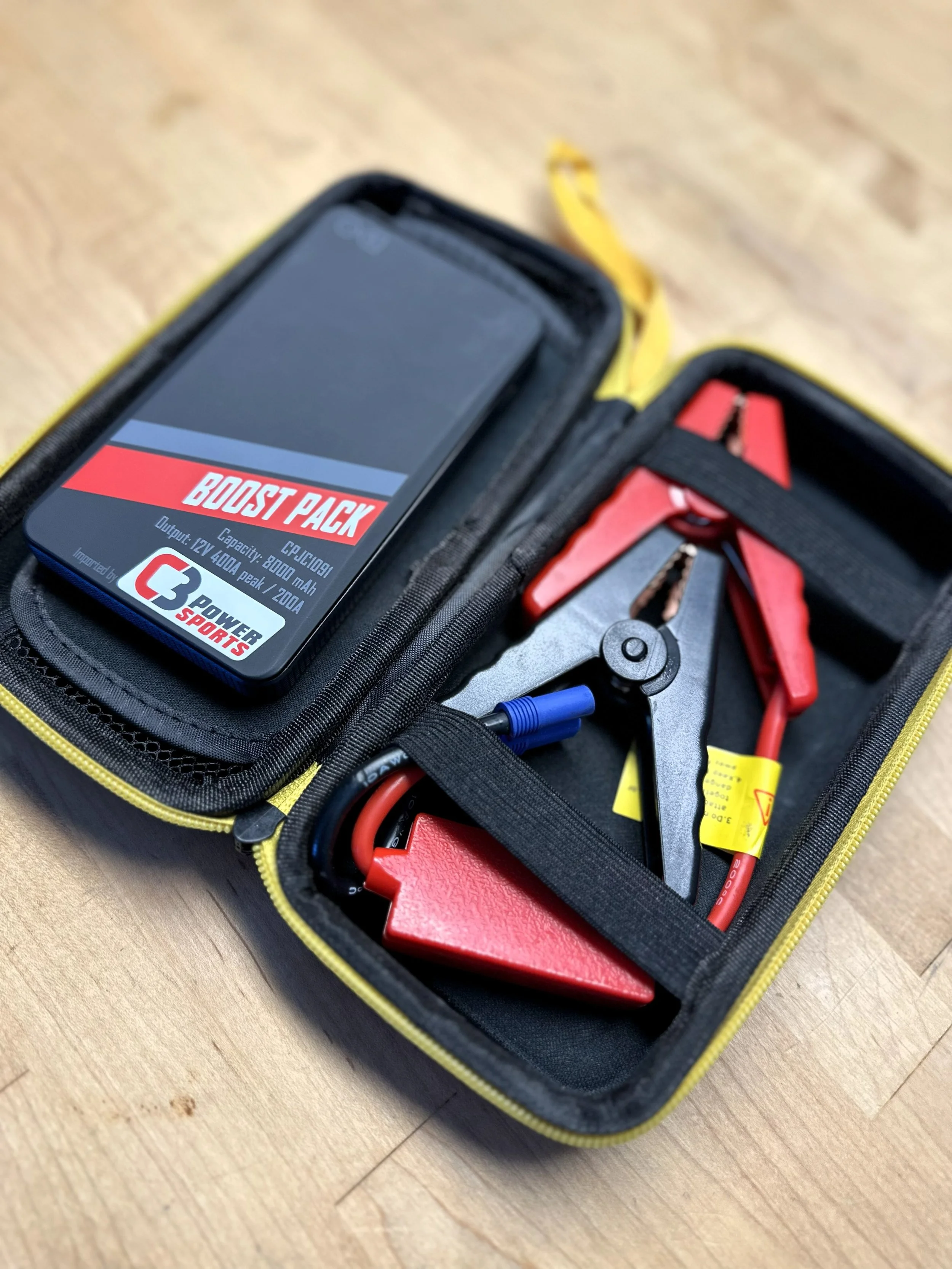
With modern electric-start bikes, a jump pack is mandatory equipment in my kit.
A dead battery in the backcountry can ruin your day quickly.
I prefer a compact personal-sized jump pack. They're lightweight, easy to carry, and typically have enough capacity to start a bike multiple times if needed.
A quick safety note: This is my personal packing list, not a substitute for avalanche education, route planning or checking current conditions. In avalanche terrain, every rider should carry a transceiver, shovel and probe—and know how to use them.
Stuck Strap
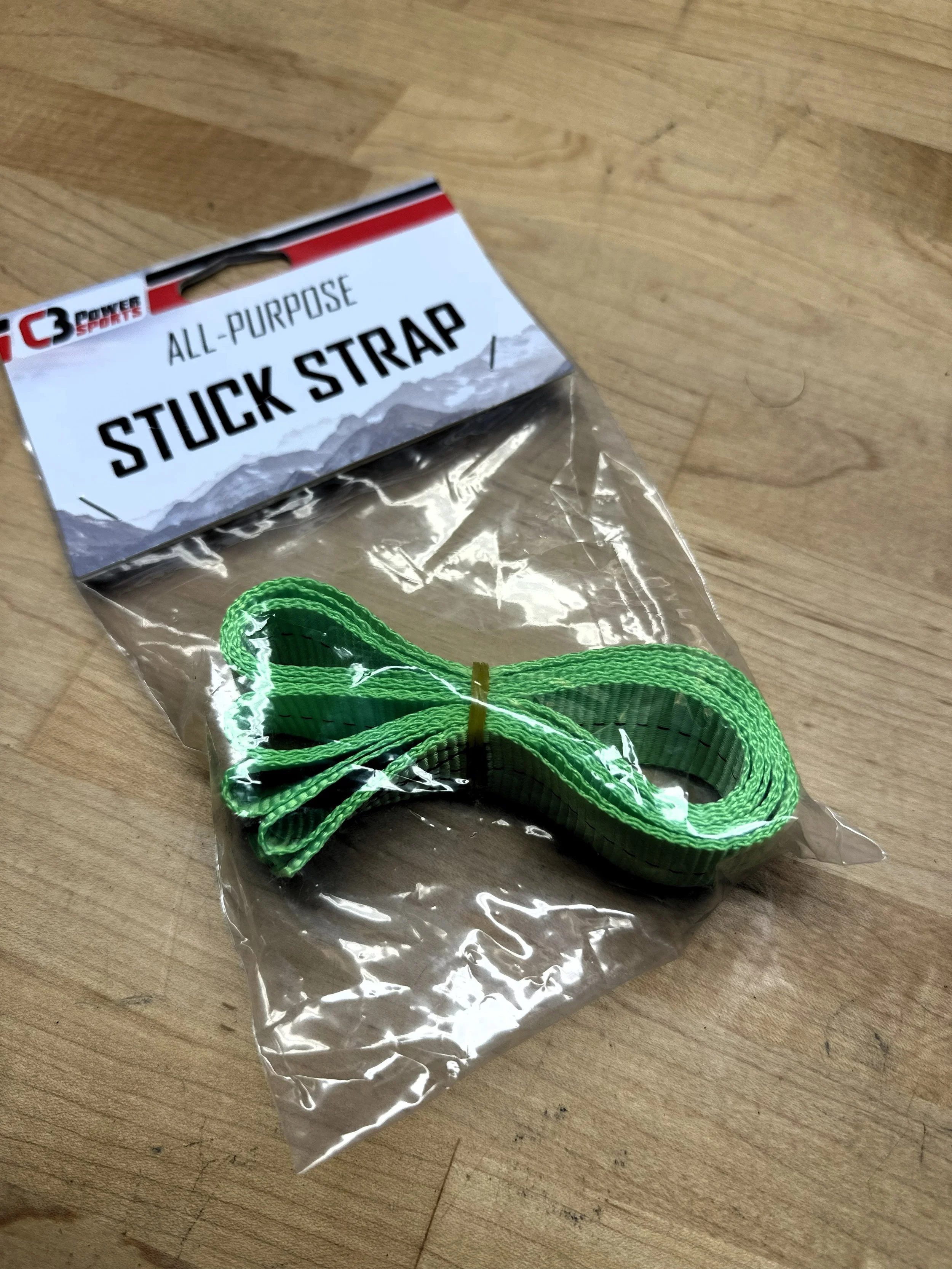
A stuck strap is one of the handiest tools you can carry.
Whether you're pulling a bike out of a hole, repositioning a machine, or helping a friend who's once again testing the limits of physics, a quality stuck strap earns its place in your gear every single ride.
Final Thoughts
This is the core gear I carry on virtually every snowbike ride. Your list may look a little different depending on where you ride, how far you're traveling, and the conditions you're riding in.
The important thing is to think through potential problems before they happen.
Because once you're ten miles from the truck, surrounded by snow, and the weather starts changing, it's too late to wish you'd packed something.
The gear above doesn't guarantee you'll never have a problem, but it dramatically improves your odds of dealing with one successfully.
In a future article, I'll dive deeper into avalanche gear, avalanche education, and some of the safety practices that have helped keep me and my riding partners safe over the years.
Until then, ride smart, ride prepared, and don't be the guy who forgot the tow rope.
About the Author
Darren Teal has been riding, building and testing snowbikes since 2010 and has helped riders throughout North America choose and set up the right equipment.. He is an authorized MTN.TOP and CMX dealer based in Post Falls, Idaho, and the owner of Moto365.
Looking for more answers? Check out our complete Snowbike FAQ.
See also: TRKTSR Review, Gear Guide
