

2026 CMX Dominator Review: A Full Season on the Snow
Going into the winter of 2025-26, I had very little seat time on a CMX kit. I wasn't quite sure what to expect, but I was excited to find out what all the buzz was about.
My first ride of the season was at the Snowbike Industry Ride in Sicamous, British Columbia. I brought both the CMX Dominator and the MTN.TOP Transfer. Since I already had plenty of experience on the Transfer, it made sense to spend the first day getting acquainted with the CMX.
Disclosure: Moto365 is an authorized CMX dealer. The opinions in this review are my own and are based on a full season of riding the kit.
First Impressions
The first thing that stood out to me wasn't the suspension, the ski, or even the handling.
It was the speed.
The CMX gearing is fast. Very fast.
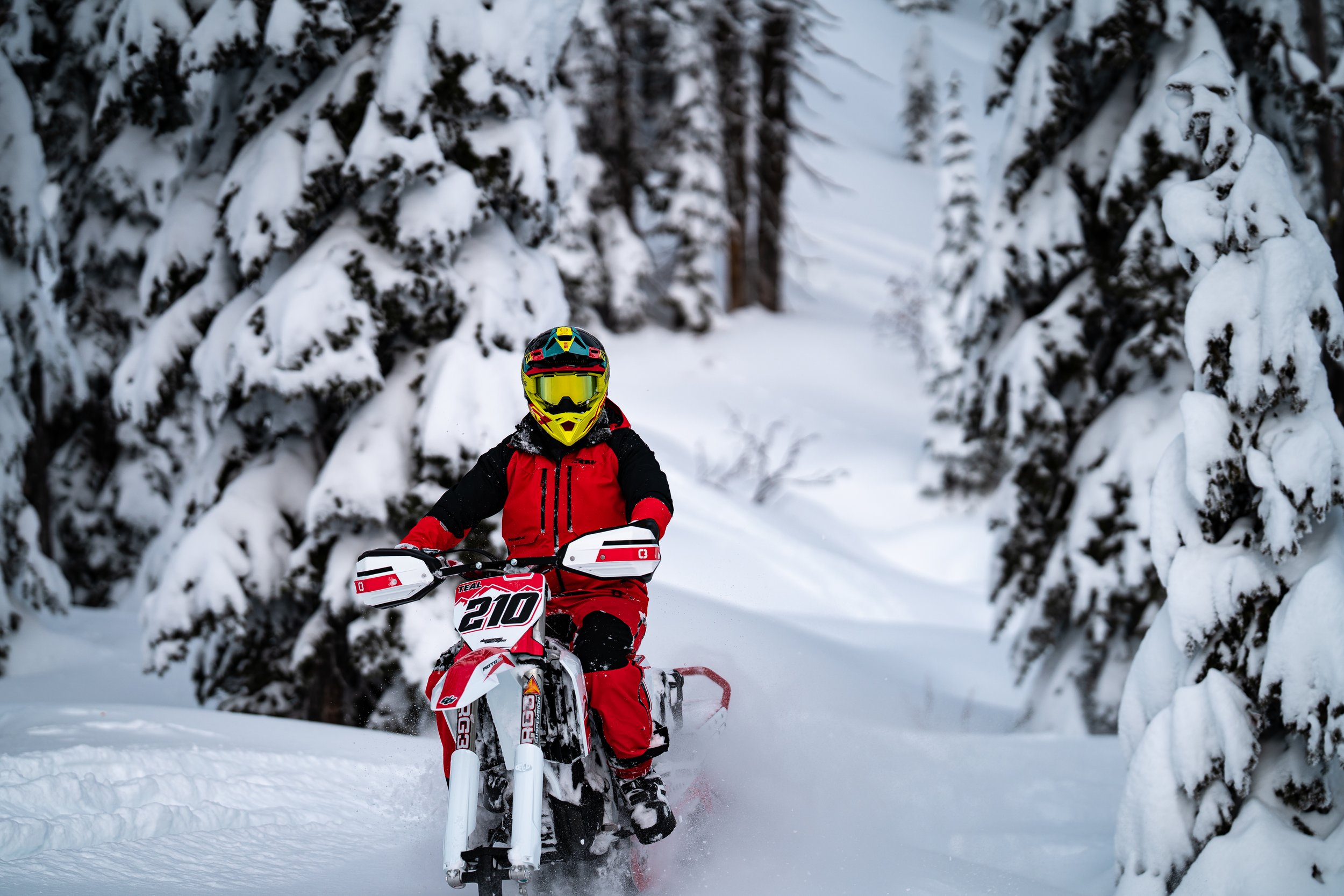
I've become accustomed to the gearing found on the MTN.TOP kits. It's excellent in the backcountry but can feel a little slow on the trail ride in and out. The CMX takes the opposite approach. Once I got comfortable being back on a snowbike for the season, I found myself effortlessly cruising past other riders in the group on the trail.
The ski felt planted, stable, and predictable. It tracked well and seemed eager to carve through corners.
The rear suspension, however, was immediately noticeable.
It was stiff. Very stiff.
That took some getting used to, more on that later.
Keeping the Comparison Fair
This is probably a good place to explain my approach for the season.
When I decided to build two nearly identical bikes—one equipped with a CMX Dominator and the other with a MTN.TOP Transfer—I made a commitment to leave both kits largely as the manufacturers intended.
Both bikes were new. Both kits were new. Both received fresh components throughout.
My goal wasn't to modify them into something they weren't. I wanted to ride each kit in its recommended configuration and learn how the manufacturers intended them to perform. That seemed like the fairest way to compare them throughout the season.
Leaving the Trail
Because it was still early season, we had a fairly long trail ride before reaching quality snow.
That gave me plenty of time to get familiar with the gearing, handling, and overall feel of the CMX.
After about ten miles—or 16 "clicks" as our Canadian friends would say—we finally left the trail and headed into the powder.
That's where any snowbike should shine.
The CMX was no exception.
In fact, that's where it really started to come alive.
A Kit That Wants to Turn
Coming from MTN.TOP kits—and Timbersleds before that—the first thing you notice about the CMX is how badly it wants to turn.
Actually, "wants" might not be strong enough.
This thing begs to turn.
Every opening in the trees looked like an invitation to carve. Every sidehill wanted another cut. Every transition in the terrain seemed to encourage a little more aggression.
While much of the group was weaving through the trees, I found myself carving and diving through the forest like a squirrel that had somehow gotten into an energy drink.
Every turn buried the bars in the snow and launched another face shot of that legendary BC powder.
Within just a few “clicks” of leaving the trail, I was completely covered in snow and grinning from ear to ear.
Why It Carves So Well
This is where you really begin to appreciate the engineering behind the CMX.
Unlike many snowbike kits, the CMX mounts the track assembly very close to the motorcycle. The drivers sit almost directly beneath the frame, creating a compact and centralized feel.
The result is a kit that feels incredibly responsive in the trees and remarkably willing to carve.
The bike transitions from edge to edge effortlessly and feels eager to change direction. Rather than fighting the terrain, it encourages a playful riding style that rewards aggression and creativity.
By this point in the day, one thing had become very clear:
The CMX Dominator wasn't just different.
It was going to be a lot of fun.
Let's Talk About That Rear Suspension
Remember that stiff rear suspension?
I couldn't stop thinking about it during that first ride.
When I was riding aggressively and charging into lines, it worked well. But I kept getting the feeling that if I relaxed for a second and hit a bump or feature wrong, it was going to send me over the bars.
That thought lingered in the back of my mind throughout much of the day.
Over time, though, something interesting happened.
The more I rode the CMX, the less I noticed it.
Part of that was likely the suspension breaking in. The bigger factor, however, was that I started adapting my riding style to the way the kit wanted to be ridden.
By the end of the season, I had completely forgotten about that concern.
What initially felt harsh eventually felt confidence-inspiring. Instead of worrying about unexpected impacts, I found myself charging through rough terrain knowing the suspension could handle it.
A Different Kind of Wheelie
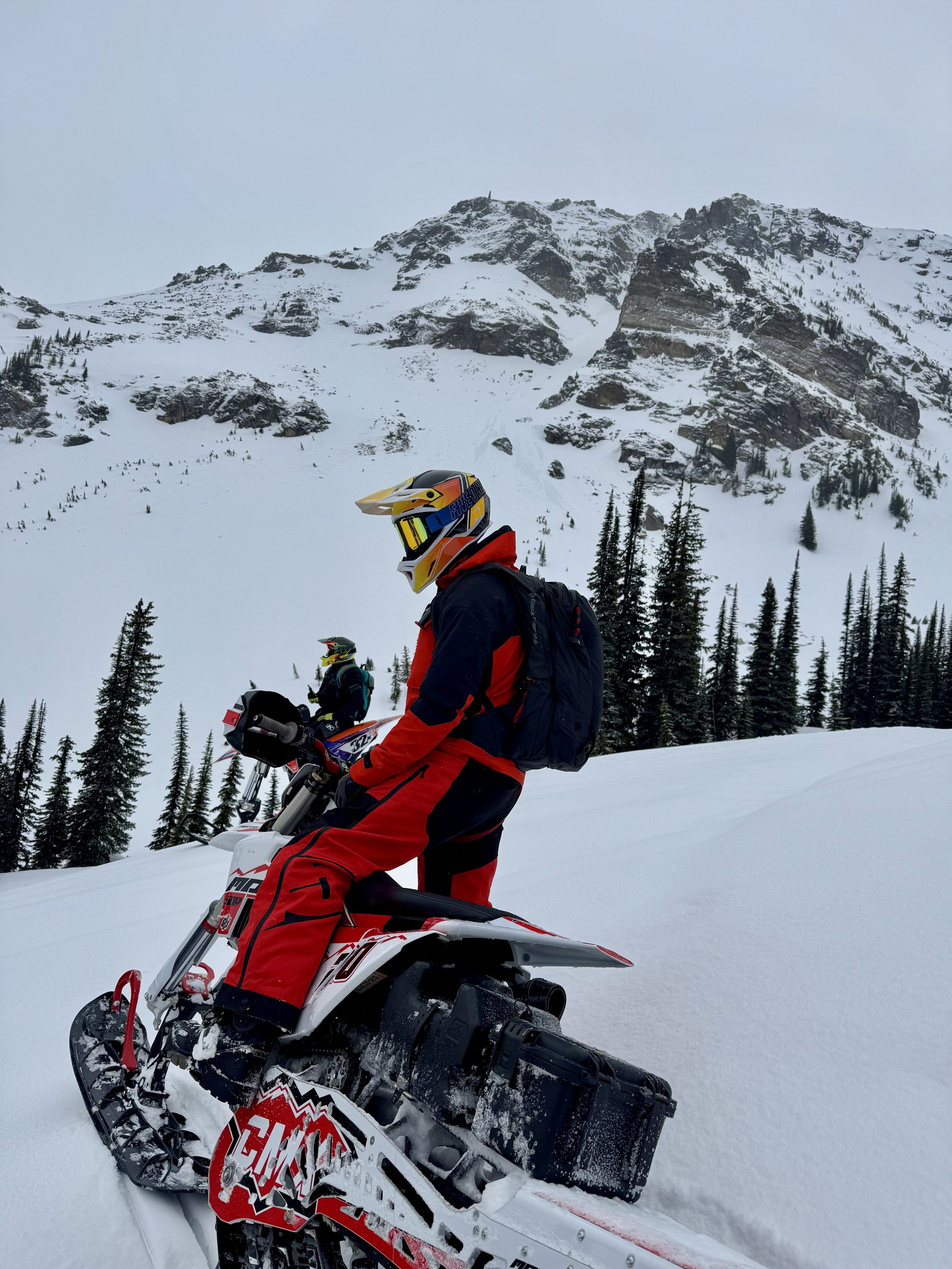
As the day progressed, we climbed into that famous BC alpine and started finding features to play on.
Once again, I discovered that the CMX behaves differently than any other kit I've ridden.
It loves to wheelie.
But it wheelies differently.
Most kits tend to lift the ski immediately when you apply throttle. The CMX doesn't.
Instead, it drives forward first, builds momentum, and then gradually lifts the ski while continuing to accelerate.
It's difficult to describe until you experience it.
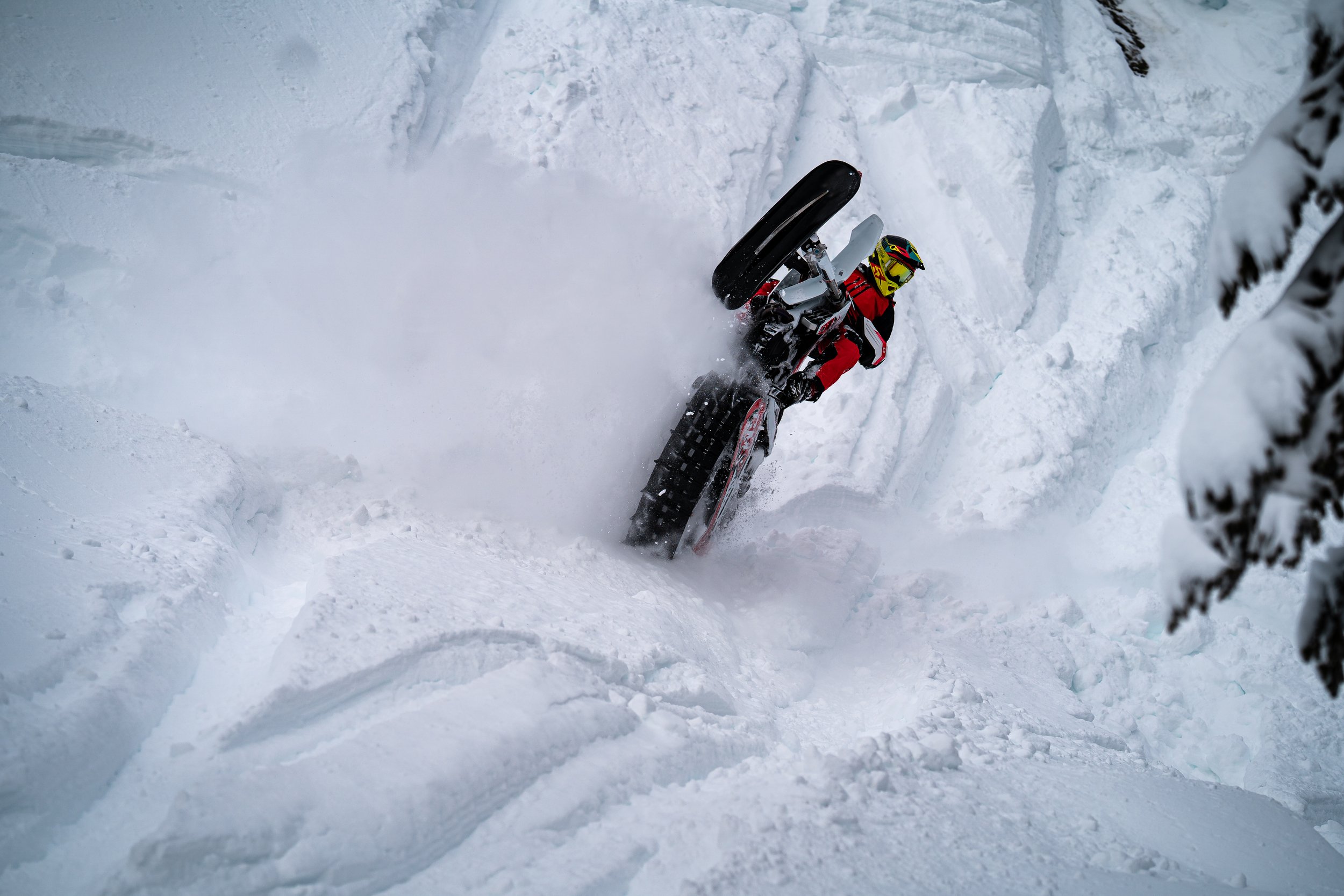
When initiating a bowtie, wheelie turn, or whatever the cool kids are calling them these days, the CMX slowly lifts the ski. At the apex of the turn, the bike is often around a 45-degree angle—much lower than many other kits.
Then something interesting happens.
As you complete the turn and begin heading back downhill, the ski continues to rise.
Suddenly you're traveling downhill in what feels like a vertical wheelie.
Most snowbike kits would make that a terrifying experience.
Somehow, the CMX just keeps going.
You can actually wheelie down the hill, maintain control, and gently bring the ski back to the snow as if gravity temporarily agreed to take a coffee break.
It's a unique characteristic that I've never experienced on another kit.
Climbing Performance
The CMX climbs very well.
However, it demands a little more from the rider than a MTN.TOP Transfer.
If your weight is too far back, too far to one side, or you're simply being lazy, the CMX can quickly remind you to pay attention. It rewards active riding and fast reactions.
Some riders will absolutely love this.
Others may prefer the more forgiving nature of other kits.
Personally, I found it incredibly fun, but it definitely asks you to stay engaged and ride aggressively if you want to get the most out of it.
Sidehilling
Sidehilling is another area where the CMX behaves differently.
It sidehills extremely well—but again, it rewards proper rider input.
When your body position is correct and you're riding aggressively, the kit feels planted and predictable.
When you're lazy with your positioning, the rear of the bike can occasionally feel like it wants to slide downhill slightly and point the bike uphill into a wheelie.
This was very noticeable during my first few rides.
As the season progressed and I adapted to the CMX riding style, the sensation largely disappeared.
Like many things with this kit, it wasn't a limitation—it was simply different.
Reliability
After a full season on the 2026 CMX Dominator, I experienced:
One broken belt
One damaged skag
Honestly, both were probably my fault.
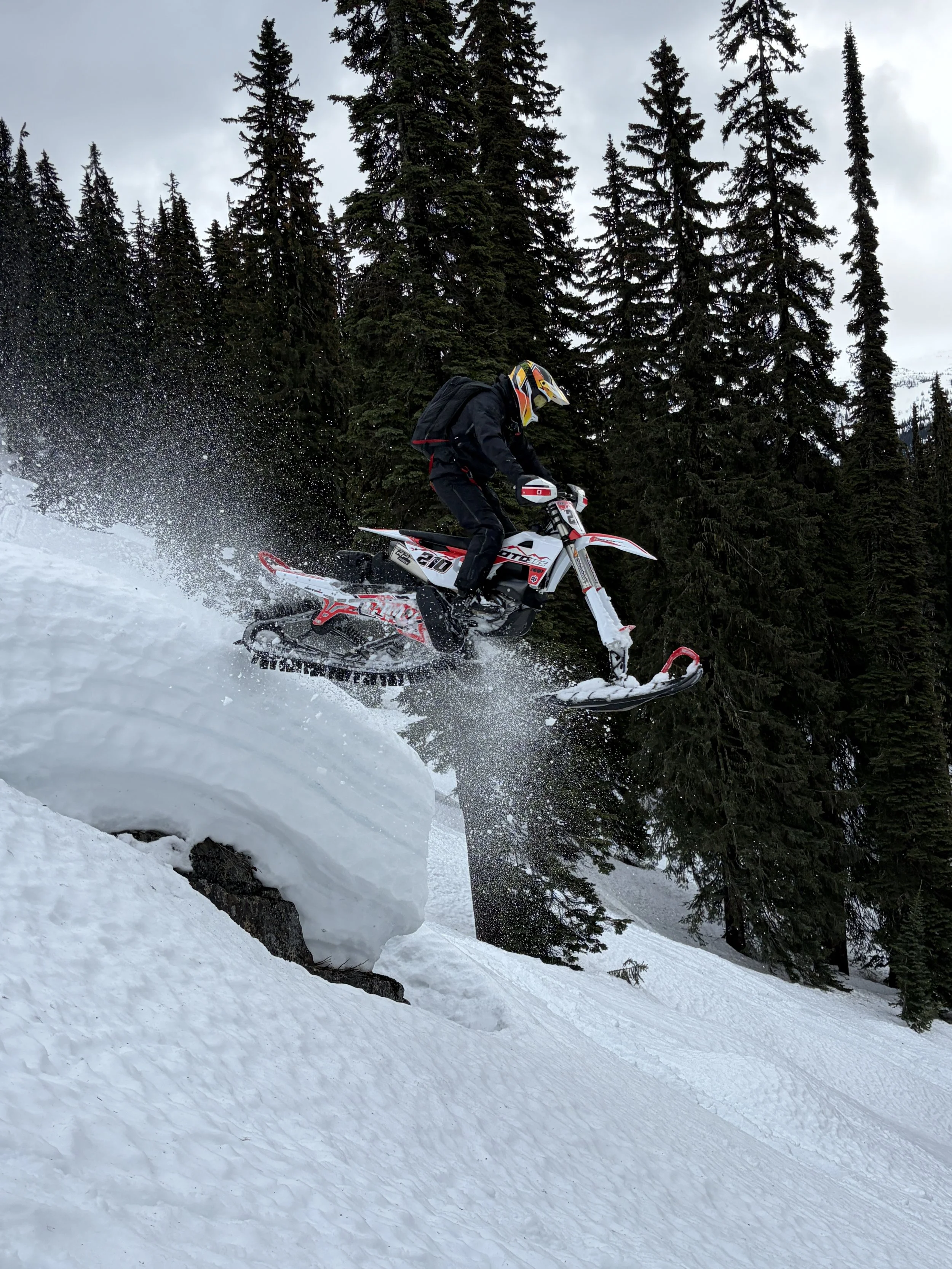
The belt failed shortly after a very hard impact with a hidden stump during a low-snow season.
The skag spent much of the winter bouncing off dirt, rocks, and early-season trails.
I don't think I can blame CMX for either one.
Overall, reliability was excellent.
Final Thoughts
It definitely took me some time to adapt to the CMX Dominator.
It doesn't ride like a MTN TOP Transfer. It doesn't ride like a Timbersled.
It's its own thing.
The more time I spent on it, the more I understood why CMX builds these kits the way they do.
They reward aggressive riding.
They carve incredibly well.
They wheelie unlike anything else I've ridden.
And perhaps most importantly, they're just plain fun.
By the end of the season, I wasn't thinking about the differences anymore—I was simply enjoying the ride.
If you’ve been curious about the CMX Dominator and wondering whether it’s worth considering, reach out. I’d be happy to help you decide whether it fits your bike, terrain, and riding style.
The fun factor is through the roof.
And once you adapt to its personality, it's hard not to appreciate what CMX has created.
About the Author
Darren Teal has been riding, testing, and building snowbikes since 2010, helping riders throughout North America choose the right setup.. He is an authorized MTN.TOP and CMX dealer based in Post Falls, Idaho.
