

Heated Handlebars: The Greatest Thing to Happen to Snowbikes Since Snowbikes
Heated handlebars may be the greatest thing to happen to snowbikes since snowbikes themselves.
A few of us—myself included—have been around since before heated bars were even an option. Remember those days?
We had absolutely no idea what we were doing.
We didn’t understand thermostats. We didn’t know temperature management was important. We were just bolting tracks onto dirt bikes, heading into the mountains and hoping everything stayed running long enough to get us back to the truck.
We had fun.
Our motorcycles, however, were not having nearly as much fun.
Most of the time, the engines ran far too cold. We didn’t yet understand that maintaining proper engine temperature was a critical part of building a reliable snowbike. We were learning as we went—and sometimes learning things several miles from the parking lot.
Our hands were also freezing.
Naturally, we experimented with electric heated grips. Unfortunately, the early setups never worked particularly well. They added wiring, drew power from charging systems that were already being asked to do too much and often created more problems than they solved.
But hey, at least our hands were still cold.
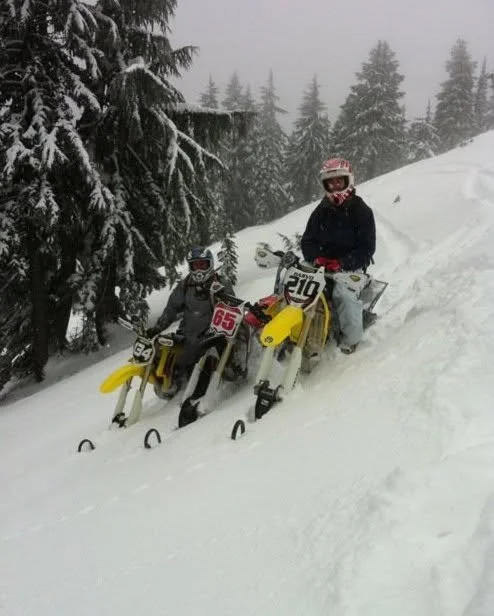
December 2010: Our first ride on the Timbersled Mountain Horse kits!
The Early Thermostat Years
Eventually, we figured out that our bikes needed to stay warm.
Our solution was to find an inexpensive thermostat housing from an older KTM and retrofit it onto a modern bike.
Did it work?
Sort of.
Okay—not really.
But we were trying.
The thermostat installation usually looked like something assembled in a garage at midnight using whatever fittings, hoses and questionable ideas happened to be available. The engine might have been slightly warmer, but our hands certainly weren’t.
Progress is progress.
Then Heated Handlebars Arrived
I’ll never forget the first time I saw coolant-heated handlebars available for purchase.
In 2016, the bars that caught my attention were from RAZE Motorsports. Not only had they developed the ingenious idea of circulating warm engine coolant through the handlebars, but the kit also came with its own thermostat.
A thermostat that actually fit.
A thermostat that actually worked.
What a time to be alive.
I immediately drove to the only local dealer carrying them and handed over approximately $400—probably the most money I had ever spent on a single snowbike accessory at that point.
I decided right then that I was going to be the guy that winter.
I would show up for the first ride with my fancy heated handlebars, casually put on my thin gloves and spend the entire day talking about how warm my hands were while everyone else suffered.
There was only one problem.
My buddy Jerry had exactly the same idea.
Neither of us had mentioned the purchase to the other, yet we both arrived for the first ride of the season with brand-new heated handlebars installed.
So much for being the only cool guy.
How Do Coolant-Heated Handlebars Work?
The system takes warm coolant leaving the motorcycle’s cylinder head and routes it through a thermostat and up to the handlebars.
The handlebars are designed with internal coolant passages. Warm coolant circulates through the bars to heat the grip areas, then returns to the engine. The fittings and internal routing vary by handlebar design.
The hot-coolant line feeding the handlebars also acts as the thermostat’s bypass circuit. When the thermostat is closed, coolant bypasses the radiators and circulates through the handlebars before returning to the engine.
That accomplishes two important things at once:
It helps the engine reach and maintain the correct operating temperature.
It keeps your handlebars—and therefore your hands—nice and toasty.
It is a remarkably simple system once everything is installed correctly.
The phrase “installed correctly” is important.
Why Heated Bars Make Such a Difference
Coolant-heated handlebars have made the snowbike experience dramatically better.
No more fighting frozen fingers all day.
No more wearing gloves so bulky that operating the controls feels like trying to text while wearing boxing gloves.
No more rotating through three pairs of damp gloves every time that one guy gets stuck again.
You know the guy.
Every riding group has one.
Heated bars allow you to wear a lighter glove, maintain better control of the bike and stay comfortable for an entire day of riding. Once you have ridden with them, going back feels almost barbaric.
Our Go-To Heated Handlebar Setup
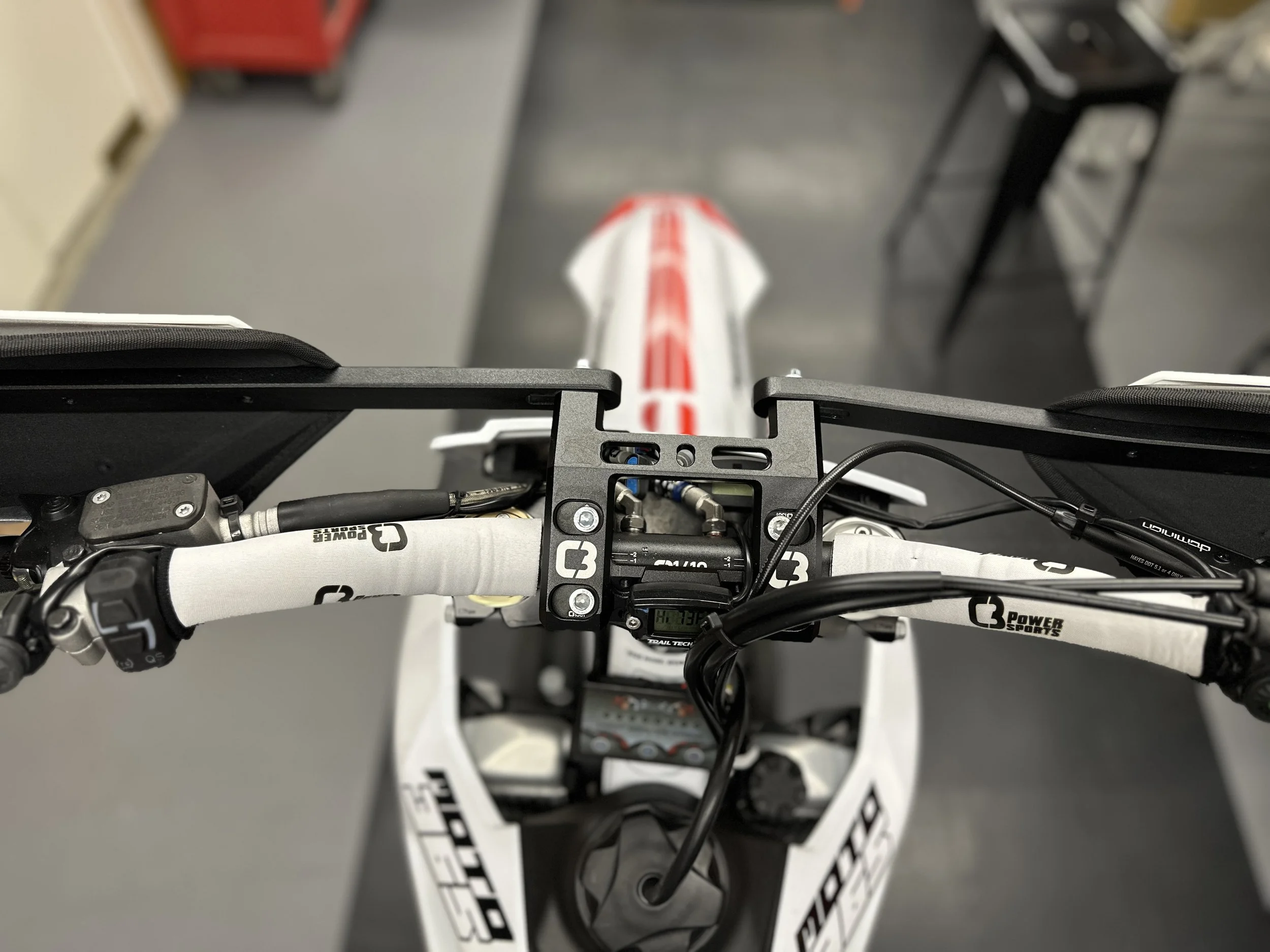
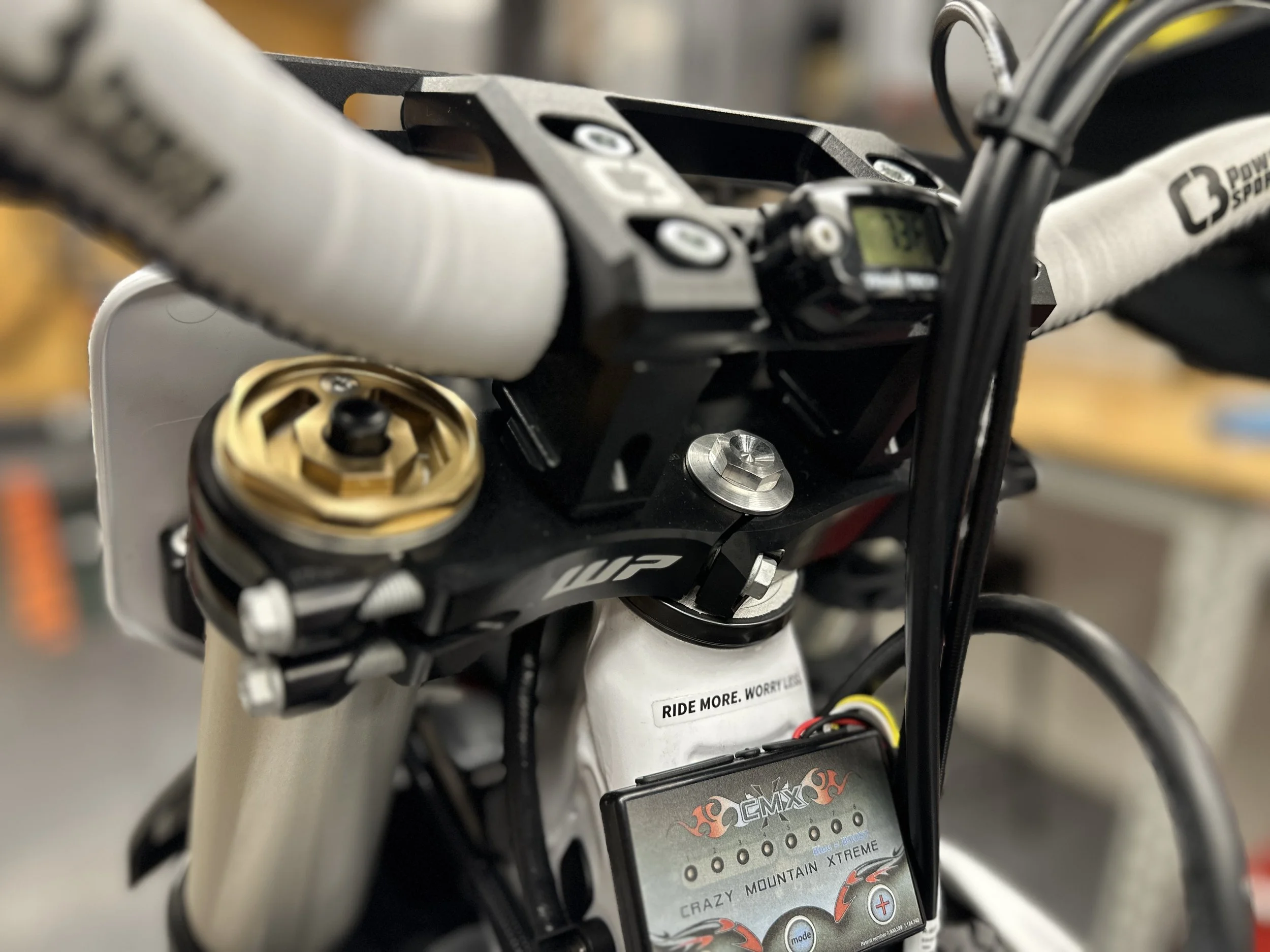
At Moto365, our preferred setup includes:
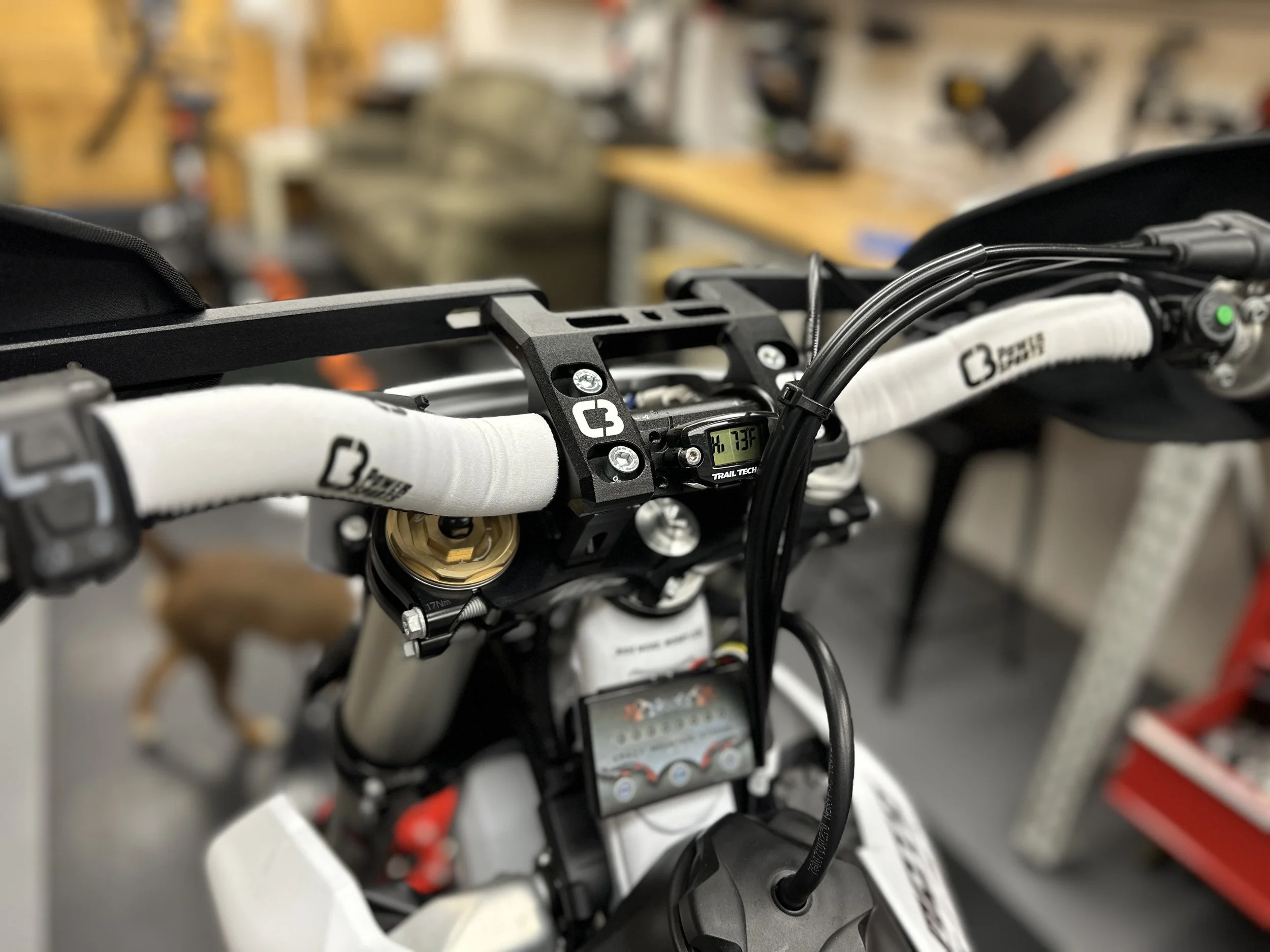
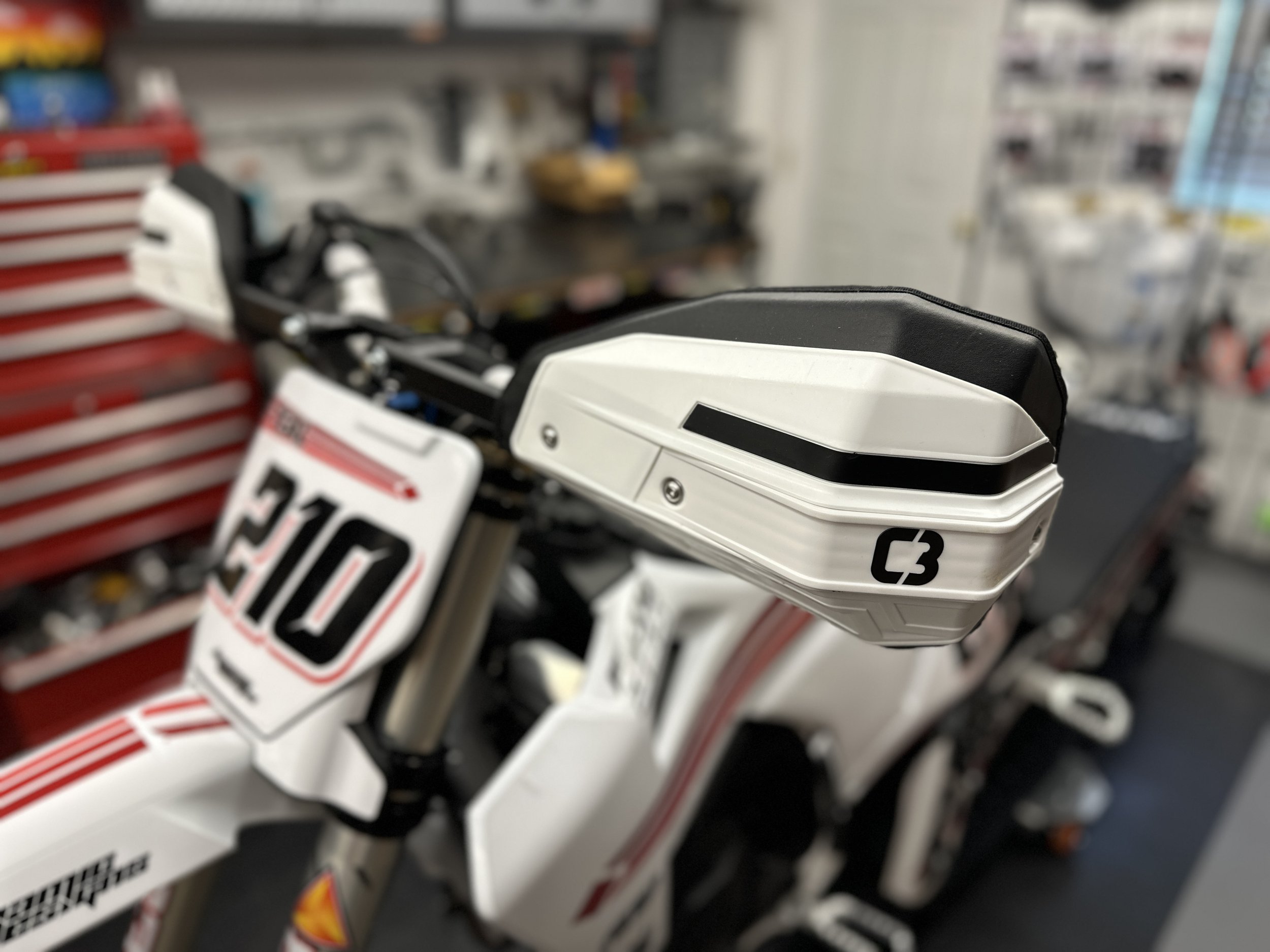
C3 FORCEFIELD NXT wrap-around handguards with the one-piece mount
ODI lock-on grips in black (colored grips become un-colorful real quick)
Choose the thermostat configuration and riser fit kit for your exact bike, and confirm the temperature-probe fitting before ordering. Contact Moto365 for Matechuk bar availability and help matching the complete setup.
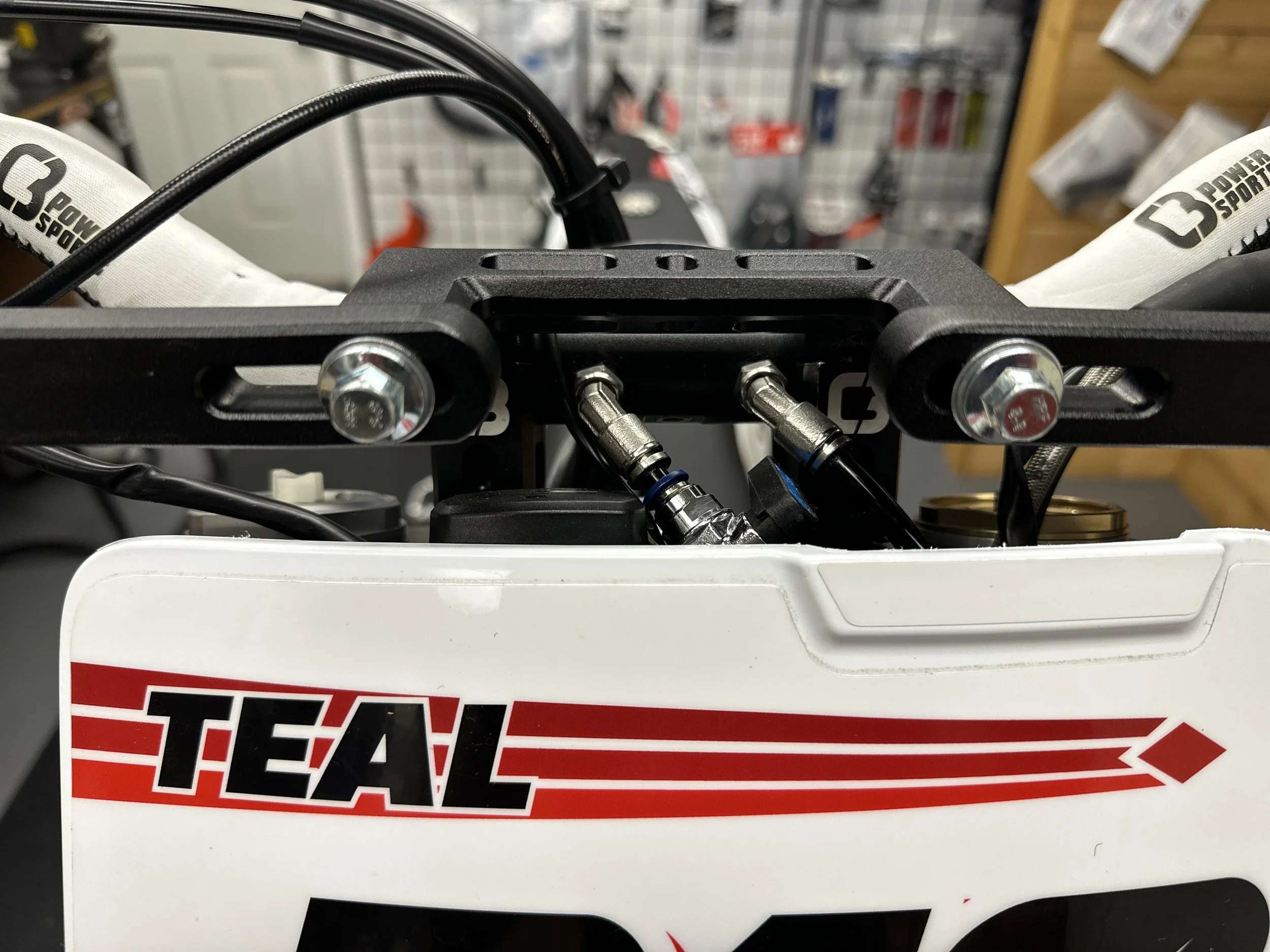
We particularly like the Matechuk Signature Series bars because both coolant lines exit from the front of the handlebars, rather than having one line in front and one in back.
That allows us to use a lower bar riser and gives us much cleaner, more controlled hose routing. It may sound like a small detail, but once you start stacking handlebars, handguards, coolant lines, controls and accessories into the same limited space, clean routing matters.
The entire system works exceptionally well together. The thermostat manages engine temperature, the bars keep your hands warm, the handguards provide protection, the bar sleeves help retain heat, and the Trail Tech gauge lets you see exactly what the motorcycle is doing.
It also leaves clean mounting options for all the accessories snowbikers inevitably decide they need after saying, “I’m going to keep this build simple.”
And about that lower bar riser—yeah, that’s a whole other topic we may dive into another day.
For now, just trust us:
Low bar risers are the way.
Installation Matters
We also offer the C3 CenterFlow heated-bar and thermostat bundle.
It works extremely well, but some riders have found the supplied hose routing and connections a little tricky. If the lines are not cut, routed and secured correctly, leaks can happen.
And coolant leaks several miles into the backcountry tend to put a damper on the day.
That is where we can help. Contact Moto365 to plan your heated-handlebar installation.
We have installed these systems, worked through the routing challenges and developed a combination that is clean, reliable and designed to function as one complete package.
Heated handlebars may feel like a luxury before you have them.
After one cold day without them, they feel like essential equipment.
About the Author
Darren Teal has been riding snowbikes since 2010. He tests kits, builds custom snowbikes, and helps riders throughout North America choose the right setup. He is an authorized MTN.TOP and CMX dealer based in Post Falls, Idaho.
See also: TRKSTR Review · Snowbike Gear Guide
